Text
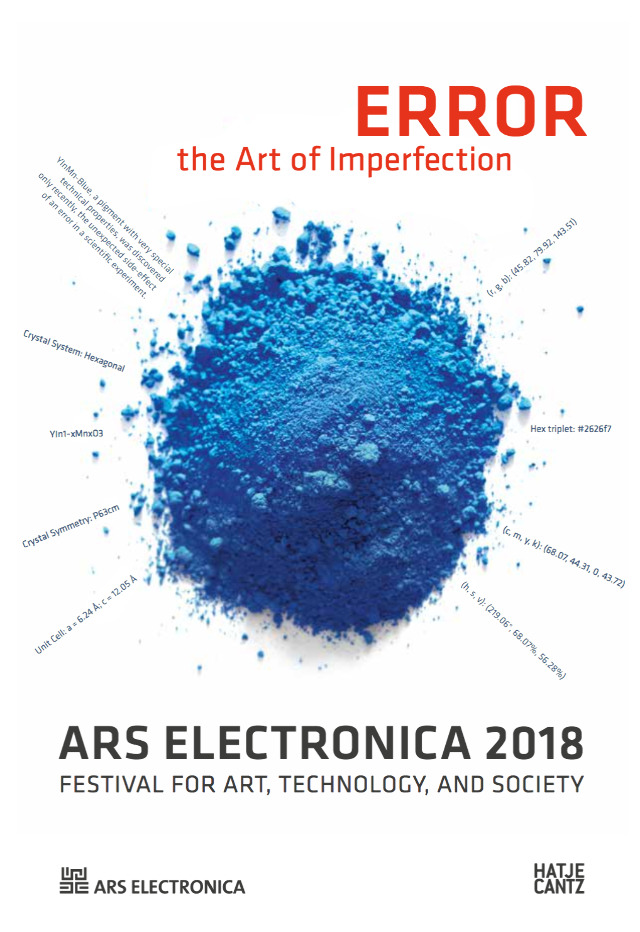
When is an error an oversight and when is it intentional deception, a fake? An error is a discrepancy from what we expect, a deviation from the norm … but what is the norm and who establishes it? An error doesn’t have to be a mistake; it can be an opportunity! But how much tolerance can we summon up for such deviations, and is it enough for the leeway and latitude that are necessary to unleash their inherent productive power which can be harnessed for social and economic innovation? Or will we allow ourselves to be misled by the populist rhetoric of fear and social scoring? Observing the current situation, one very quickly gets the impression that something has gone terribly wrong with the Digital Revolution and the 21st century. Millions of people feel that they have been defrauded of their sovereignty over their data and their privacy. Deception and fakery have become realities of everyday life, and influence public sentiment and the public opinion formation process. And hovering above it all is a diffuse anxiety of being left behind by the swift dynamics of development. Was the dream of a beautiful digital world an error, and how can we rescue this dream? This day and age is characterized by a compulsion to achieve perfection and a seemingly unwavering faith in technology. And amidst this drive to optimize, to increase efficiency and raise productivity, and, in even more instances, merely to enjoy the possibilities that digital technologies and social media place at our fingertips, we put ourselves at the mercy of machinery that does its utmost to make lemmings of digital consumption out of us. Big Data surveillance takes preventative action upon detecting any deviation from our habitual ways. And it is said that in the future, social scoring will do an even better job of optimizing our behavior and attuning it to social norms and standards. The more the technologies deployed for this purpose are perfected and made more efficient, the tighter our situation becomes. Whoever doesn’t fit in sticks out and gets cut. But it is precisely this imperfection that offers the greatest potential for new solutions. Our objective should not be optimization, since this is merely a best-possible approach and adaptation to what we can now think and deem correct. Optimization leaves no leeway for the unanticipated, and thus no latitude to recognize and rectify what actually are undesirable developments or to come up with better ideas with which to set forth on alternate courses. Effectively dealing with errors, risk tolerance and creativity are perhaps the skills that are most important for our future. How many errors in the genetic sequences of living creatures did evolution have to make until LUCA (last universal common ancestor) became Homo sapiens 3.5 million years ago? And how many errors did Homo sapiens need to learn from in order to achieve our current state of development? And how much poorer in terms of experiences and insights would humankind now be if there had always only been “normal” people and the statistical mean … no other kinds, deviant thinkers, people of different colors, or those with alternative beliefs?