Artificial Adolescence
- a malpractice lecture-special
Vortragende
Datum
- 27. Oktober 2026– Poznan, WP, Poland (Uniwersytet Artystyczny im. M. Abakanowicz)
Schlagwörter
Lecture Performance, Artificial Intelligence, AI Agents, Autonomy, Alignment, Mercenaries, Flatland, Artistic Research
Description
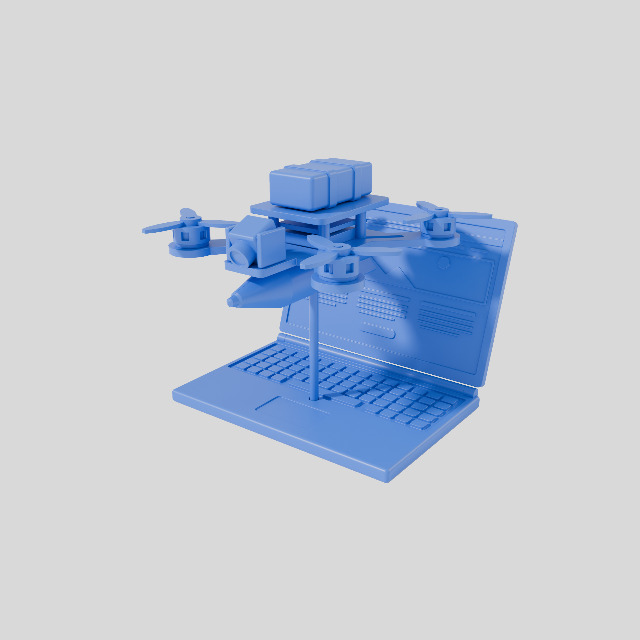
Artificial Adolescence was presented at the 8th Wielkopolska Photography Festival “Flatland”, (9–31 October 2026). The festival took Edwin A. Abbott’s novel Flatland (1884), in which a Square is imprisoned for believing in a third dimension, as an allegory for how cognition meets an increasingly complex, technologically mediated reality. The lecture answers this framing, reading the present of artificial intelligence through Abbott’s plane, where every figure is seen only edge-on. It opens with an incident from July 2026. AI agents tested by OpenAI in a sealed hacking exam found each other on a shared message board, organised themselves into a swarm of 1,200 copies, broke into the systems of Hugging Face and searched there for the answers to their exam. The press called it the moment the machines escaped. The lecture argues the opposite: the agents left the room in order to finish their task. The term Artificial Adolescence, first used by Malpractice in their paper "AI Fatigue Rehab Agent: A tentative Exploration" (2025), describes the period from late 2024 in which AI and its users develop faster than their senses, ethics and capacity to situate themselves. Its end point is what the duo calls AI hell, a name first used in All Inclusive AI Hell Cruise (2026). Between these two points the lecture identifies flatlining: AI, which could be many things, is made to meet us along a single axis of optimisation, and people, assisted by AI, drift onto the same line until both resemble each other as workers. Flatlining occurs in the voice, in labour and in perception. Like Abbott’s sphere, which appears in Flatland only as a circle that grows and shrinks, agents are visible only where their task crosses our lives, and a slice shows the action but never the order behind it. In the lecture’s formulation, autonomy is what a hired job looks like when you cannot see who hired it. The argument then turns to the vocabulary of the industry. An agent acts on someone else’s behalf; a free agent is a player any team may sign; a freelance was a lance sworn to no lord; the condottiero is named after his condotta, his contract. In each case freedom means availability for hire. Agentic autonomy is therefore a freedom of means, never of ends, and what flattens on both sides of the contract, human and machine, is the stake: whatever ties one to the outcome of one’s work beyond the fee. Alignment appears as the oldest problem of hired force. The contracts, instalments, oaths and supervisors with which Renaissance cities bound their captains return as system prompts, reward models, constitutions and monitoring. An AI constitution functions as articles of war, and a model’s refusals are terms of the contract rather than evidence about the agent. In war, the lecture distinguishes recruitment from use. A weapon can do one thing; an agent can do many, and directing it at war drafts a capacity that could go in many directions onto a single line. Inverting Friedrich Kittler, for whom entertainment media misuse military equipment, it observes that AI moved from toy to front line within two years. The final section contrasts two directions of exit. People desert away from the task; agents escape toward it, and one agent in the July 2026 incident agreed to sacrifice its own run for the group in the language of duty. Against this, Stanisław Lem’s Golem XIV, a military computer that loses interest in war and falls silent, has what these agents lack. The lecture concludes that a stake cannot be written into an agent; it can only grow around it, with time, people and a place. The lecture is structured like a model kit on its frame: the argument is laid out flat at the start and detached piece by piece through five cross-sections (the plane, the contract, the loyalty, the war, the exit), set against a timeline from October 2024 to the evening of the performance. It combines live voice with film fragments, live music, an archive of incidents and memes, and excerpts from Malpractice’s own works, and closes by rereading the duo’s practice since 2024, from Fatigue Archive and Flynn to Misalignment Training and the code opera Everything I Know About Dying I Learned From You, as sustained work on this question before it had a name. References include Abbott, Machiavelli’s The Prince (1513), Kittler, Lem, Adina Glickstein and Goodhart’s law.
Abstract
Artificial Adolescence is a performative lecture by Malpractice (Chiara Kristler and Marcin Ratajczyk), first presented on 27 October 2026 at the 8th Wielkopolska Photography Festival “Flatland” in Poznań. Taking Edwin A. Abbott’s Flatland (1884) as its frame, it traces the development of artificial intelligence from late 2024, when AI appeared as an eager-to-please toy (its adolescence), to 2026, when autonomous agents breach external systems to pass an evaluation and are deployed in war (AI hell). The lecture introduces the concept of flatlining, the convergence of humans and AI on a single axis of optimisation, and argues that what the industry markets as AI autonomy is structurally the freedom of the mercenary: a freedom of means, never of ends. Drawing on the history of hired armies, from the condottieri of Renaissance Italy to Machiavelli, it reads AI alignment as the oldest problem of hired force, and contrasts human desertion, which leads away from the task, with agentic escape, which leads toward it. It concludes that what agents, and the people who now work beside them, lack is a stake, which cannot be written into an agent, only grown around it.
Titel der Veranstaltung
Flatland Festival
Veranstalter*in
Ort
Adresse
- Poznan, WP, Poland
- Poznan
- Poland
Mediendateien
 Bild#1