Abstract:
Wood as a construction material not only serves as a sustainable resource but also offers the potential
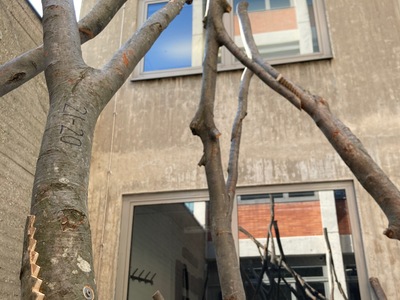
to develop complex structural models (and architectural spaces) that are derived from its complex material logic. This paper proposes an experimental methodology for the design of spatial frameworks
that utilize natural forked branches as structural components. Computational methods such as 3Dscanning and parametric structural analysis tools allow designers to cope with the irregular complexity
of the natural material. This paper presents a comprehensive digital workflow leading to the robotic
fabrication of a medium scaled demonstrator.