Abstract
The history of inflatable architecture is full of futuristic designs and fantastic structures. Starting in the years after 1945 architects conceived flying cities, buildings with pneumatic protrusions and experimented with sensory perceptions within the newly created forms. The history of these designs is full of ingenious ideas and plans, creative solutions and promises of a better society – hardly any of these were realised. The promises were too grand, the willingness of building contractors and residents to adapt to the new circumstances too low, and knowledge of the processing, material properties and durability of the PVC films used too limited.
This paper traces the history of a Viennese company to illustrate the interrelationships between pneumatic architecture and traditional craftsmanship, the transfer of knowledge between small businesses, universities and architectural firms at local and international level, and the technological history of plastic film processing. It is based on a study of the history of “schulteswien”, a company with three generations of experience in the processing of plastic films. A company that had to constantly reinvent itself in the decades after 1945 in order to keep pace with both technical developments and the changing industrial environment.
Description
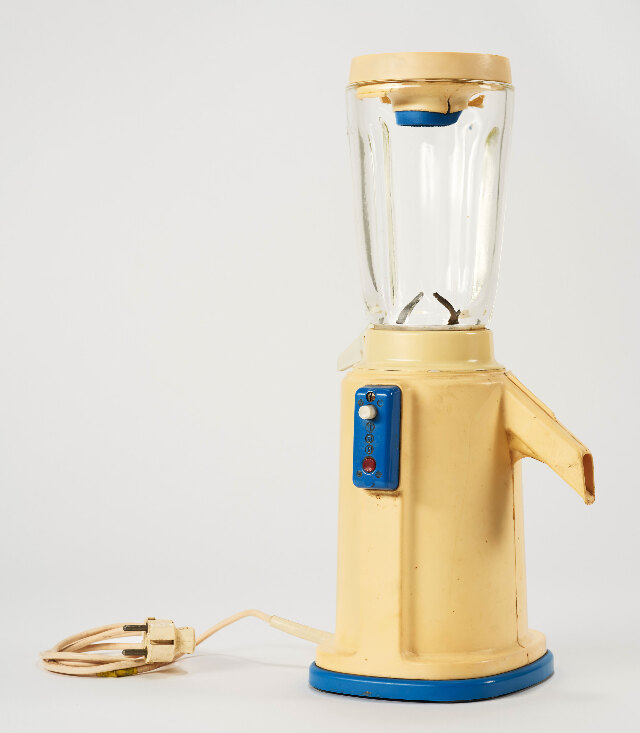
Caption: Blender “Trifix” produced by Bauknecht, 1955, inventory number 307754/41, photography: TimTom, Wien Museum
Titel der Veranstaltung
53rd ICOHTEC Annual Meeting
Veranstalter*in
International Committee for the History of Technology